

A flag lives in the wind. It snaps, ripples, twists and whips against its own hardware hour after hour. Long before the fabric itself gives out, the weakest point usually reveals itself — and in most cases that weak point is the finishing: the hem, the fly end, or the header where the flag meets the pole. Good flag stitching is what keeps a printed design readable and a banner flying instead of fraying.
This guide walks through the construction details we work with every day at our workshop: how hems are folded and sewn, how the fly end is reinforced, and which header styles suit different mounting situations.
Why Finishing Deserves as Much Attention as Fabric
Choosing a fabric weight and print method is only half of a flag’s story. The finishing determines how the load of the wind is distributed across the flag. A well-finished flag spreads stress across multiple layers of fabric and stitching. A poorly finished one concentrates that stress into a handful of stitches, which then tear one by one.
Three elements do most of that work:
- The hem — the folded border that seals the raw fabric edge
- Fly-end reinforcement — extra material and stitching at the trailing edge
- The header — the reinforced strip where the flag attaches to a pole, rope or frame
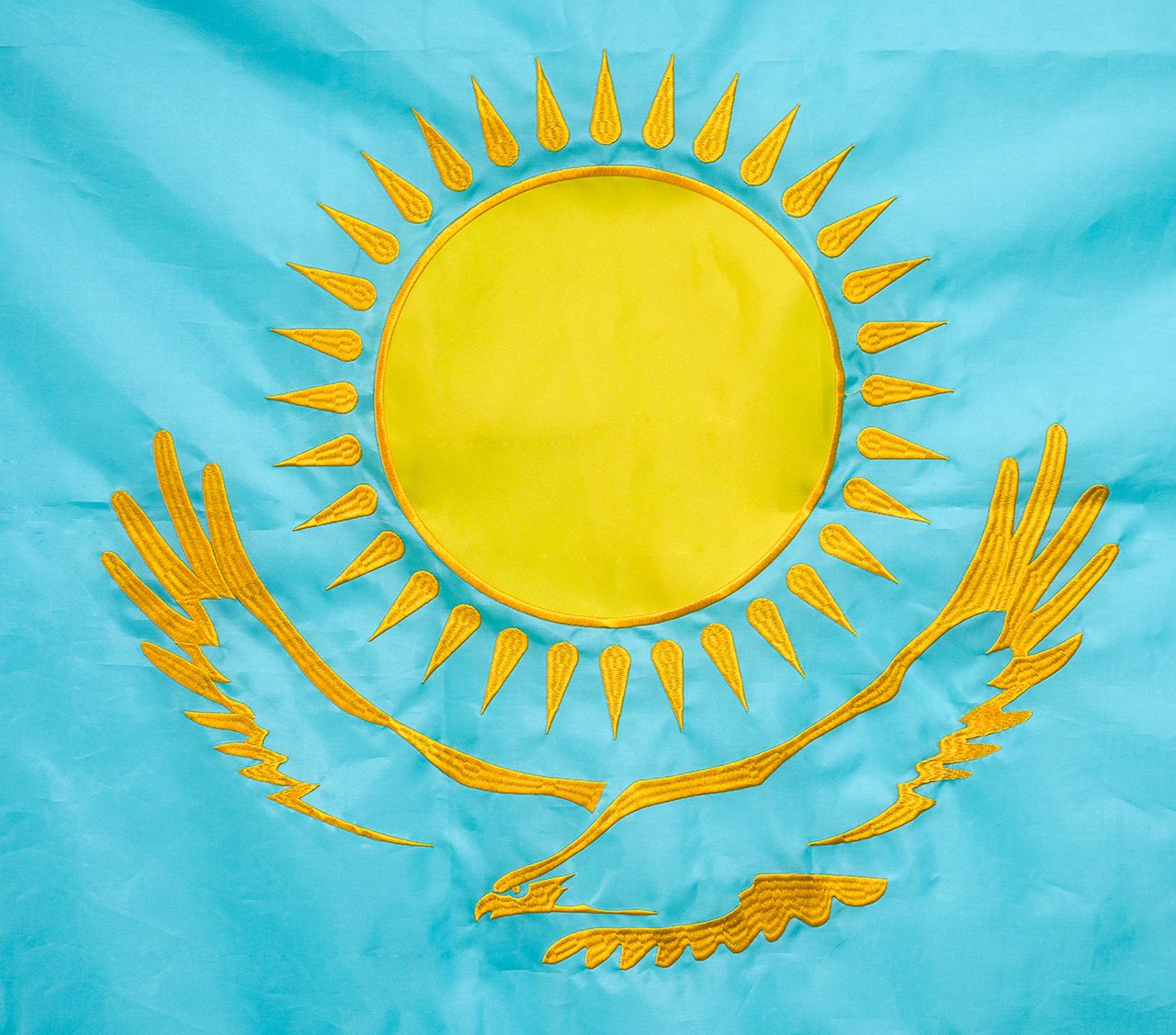
The Flag Hem: Sealing the Edge
A raw cut edge of woven polyester or knitted polyester will fray quickly in wind. Hemming solves that by folding the edge back on itself and locking it down with stitching.
Single-Fold vs. Double-Fold Hems
A single-fold hem turns the fabric edge under once before stitching. It is lighter and works well for small indoor flags, desk flags and decorative pennants where wind load is limited.
A double-fold hem folds the edge twice, creating four layers of fabric at the border. It adds a little weight and stiffness, but it significantly improves the flag’s resistance to tearing at the edges. For outdoor flags, double-fold hems are the standard approach.
Stitch Type and Spacing
Most flag hems are sewn with a lockstitch or a chain stitch. Lockstitch is the more common choice because it resists unravelling if a single stitch breaks. Stitch length matters too: shorter, denser stitching distributes stress more evenly, while overly long stitches create gaps that fabric can pull through.
Thread choice should match the fabric. Bonded polyester thread offers good UV and moisture resistance and is a practical pairing for outdoor flags. Cotton thread is sometimes used for historical reproductions but does not hold up as well outdoors.
Fly-End Reinforcement: Protecting the Most Abused Edge
The fly end is the edge that travels the furthest and moves the fastest. When a flag snaps in the wind, the fly end whips and curls, and that constant flexing is what wears it out. Fly-end reinforcement is the single most valuable upgrade for an outdoor flag.
Common approaches include:
- Extra folded layers — folding the fly end over two or three times to build up a thicker edge
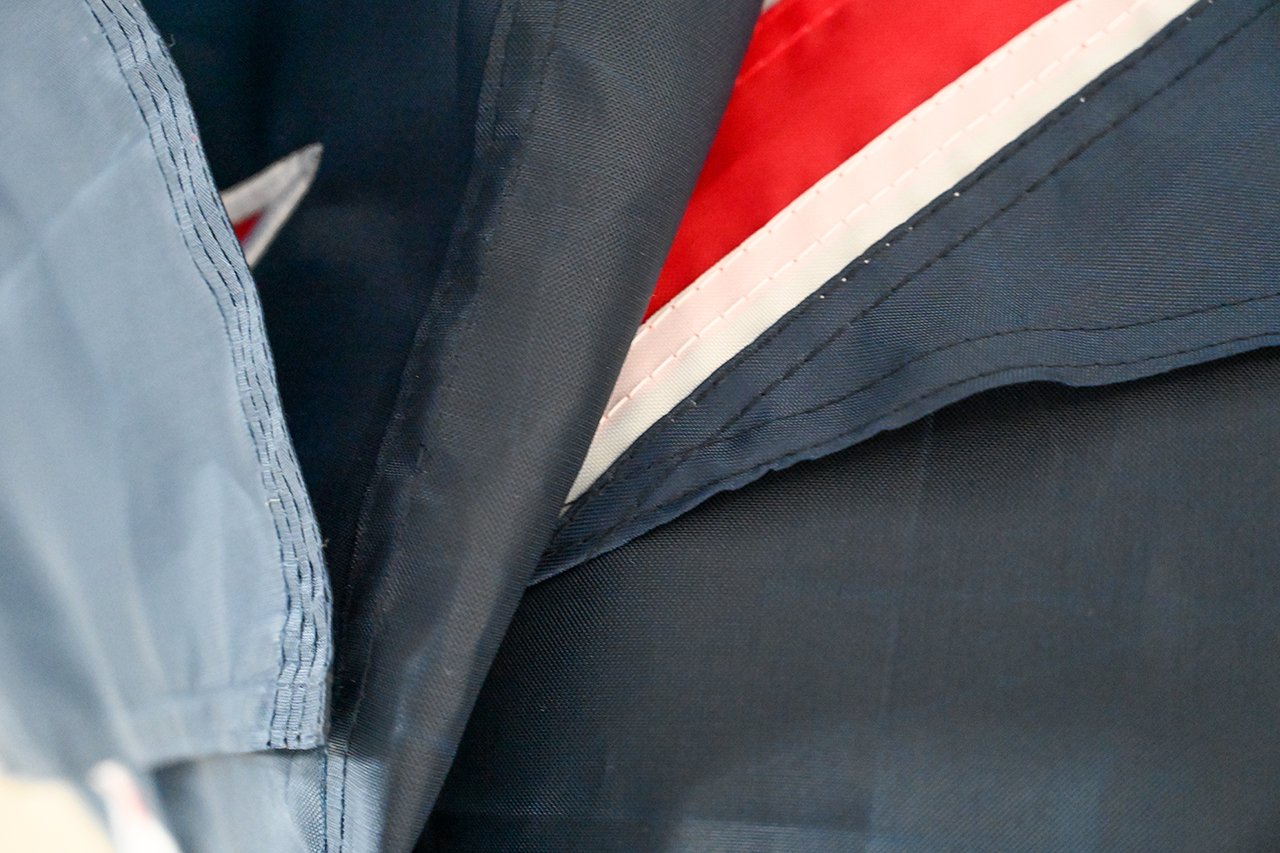
- Reinforcement tape or webbing — sewing a strip of binding tape along the fly edge for added tensile strength
- Multiple rows of stitching — two or more parallel stitch lines running the length of the fly edge
- Bartack stitching — dense, short zigzag stitches placed at corners and stress points to lock layers together
- Corner reinforcement patches — triangular fabric patches at the fly corners to prevent the corner from splitting
For large flags — say, anything intended for a tall outdoor pole — combining several of these methods is normal practice. A fly end with reinforcement tape plus multi-row stitching handles far more wind cycling than a plain hem, and flag hem reinforcement at the fly corners prevents the classic failure mode where the corner tears diagonally inward.
Flag Header Types and When to Use Them
The header is where the flag connects to the world. Choosing the right header type depends on the pole, the mounting hardware and how often the flag will be taken down. Here are the common flag header types we produce.
| Header Type | Best Suited To | Notes |
|---|---|---|
| Canvas header with grommets | Outdoor flagpoles, halyard systems | Durable white canvas strip with brass or stainless grommets; takes snap hooks and rope clips |
| Pole sleeve (pole pocket) | Indoor display, garden poles, parade use | Fabric tunnel along the hoist edge; slides over the pole with no hardware needed |
| Rope and thimble | Traditional halyard flagpoles | Rope sewn into the header with a metal thimble at the top for hooking to the halyard |
| D-rings or loops | Banner frames, wall mounting, teardrop displays | Metal rings or fabric loops spaced along the hoist for tensioning |
| Hook-and-loop or tie straps | Quick-change displays, promotional setups | Fast to swap; suited to sheltered or short-term outdoor use |
Canvas Header with Grommets
This is the traditional outdoor workhorse. A strip of heavy canvas is folded over the hoist edge and stitched with multiple rows, then grommets are set at the top, bottom and sometimes the middle. Grommet material matters — stainless steel or brass resists corrosion better than plain steel in coastal or rainy conditions.
Pole Sleeve
A sleeve is simply a tunnel of fabric sewn along the hoist edge, sized to slip over the pole. Sleeves are quiet, hardware-free and popular for indoor and ceremonial flags. The sleeve should be sized with a small allowance so the flag slides on easily without being loose enough to flap around the pole.
Rope and Thimble
Rope headers are stitched into the hoist edge in place of canvas. A thimble at the top protects the rope from chafing against the halyard hook. This style suits traditional flagpole setups, especially where the flag is raised and lowered regularly.
D-Rings and Tie Straps
For banner frames, feather flags and wall-mounted displays, D-rings and fabric tie straps allow tensioning across the whole edge. This keeps the printed surface flat and readable, which matters for advertising and decorative banners.
Matching Construction to Use
There is no single correct construction — only the one that fits the job. As a rough starting point:
- Indoor or ceremonial: clean hem, pole sleeve, light reinforcement
- Regular outdoor flagpole: double-fold hem, fly-end reinforcement, canvas header with grommets
- High-wind or exposed sites: double-fold hem, multi-row fly-end stitching, reinforcement tape, corner patches, heavy canvas header
- Promotional banners and frames: D-rings or tie straps with reinforced stress points
If you are unsure which combination suits your project, describe how the flag will be mounted and how exposed the location is — that is usually enough to recommend a practical construction.
Bringing It Together
Every detail in flag stitching exists to solve a specific problem: fraying edges, wind fatigue at the fly end, and secure attachment at the header. Get those three right and a flag will hold its shape, colour and print quality far longer than one where the finishing was treated as an afterthought.
Whether you need a single ceremonial flag or a batch of promotional banners, our team at flags-factory.com can walk you through hem, reinforcement and header options and match them to your pole or display setup. Browse our range or send us your artwork and specifications to get started.
Email: flagswin@flag-win.vip
WhatsApp: +86 13031678795
Facebook: https://www.facebook.com/StarFlagFactory/
Alibaba.com: https://wfqyflag.en.alibaba.com/
