

Embroidered vs Printed Flags: Which Style Fits Your Project?
When you order a custom flag, one of the first decisions is how the design gets onto the fabric. Printing and embroidery are the two main routes, and they produce very different results — not just in appearance, but in weight, cost, production time and how the flag behaves outdoors. Neither method is universally better; each suits a particular set of circumstances. This guide walks through how each process works and helps you match the method to your project.
Two Very Different Ways to Decorate Fabric
How printed flags are made
Printed flags start with a digital file that is transferred onto fabric — usually polyester — through dye-sublimation or direct printing. The ink becomes part of the fabric rather than sitting on top of it, which keeps the surface smooth and light. Because the process reads the artwork digitally, printed flags can reproduce almost anything: gradients, photographs, fine text, small logos, complex crests and multi-colour artwork.
Printing also allows both sides of a flag to be finished in different ways. A single-reverse flag shows the image correctly on the front and mirrored on the back; a double-sided flag uses two printed panels with a liner between them so both faces read correctly.
How embroidered flags are made
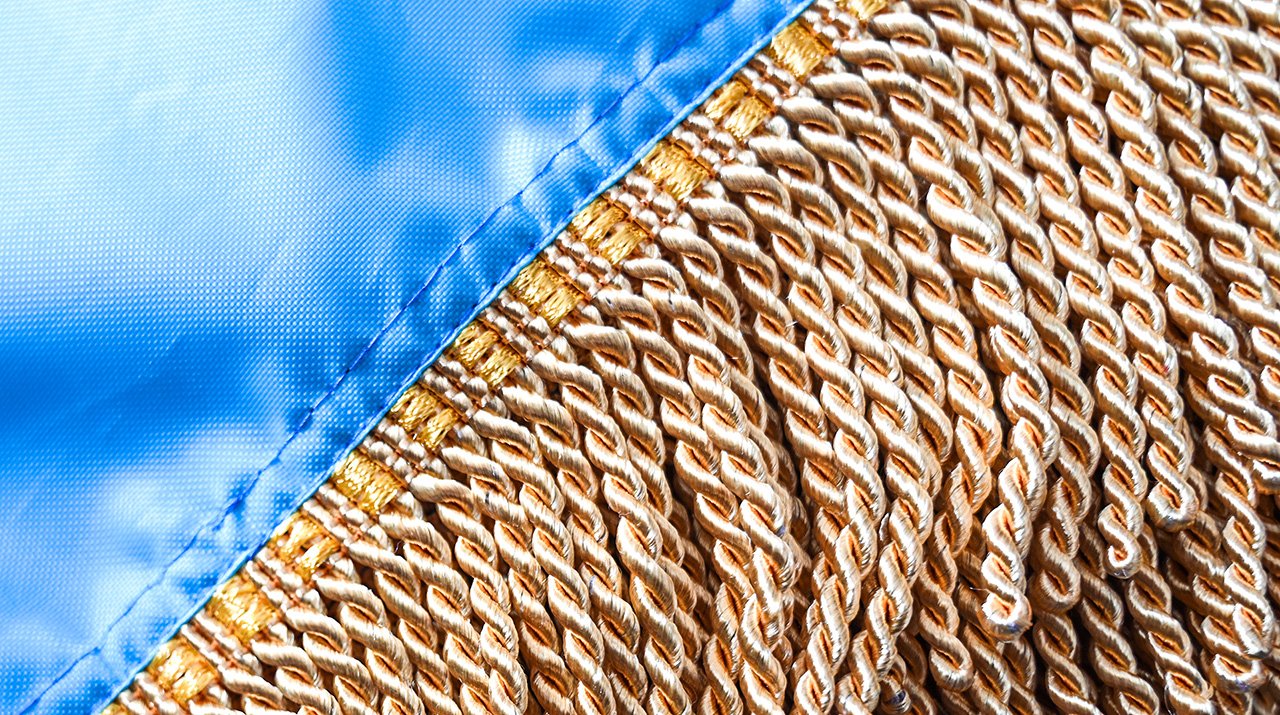
Embroidered flags are built from fabric and thread. Individual elements — letters, stars, emblems, borders — are stitched directly onto the base fabric, and large fields of colour are often made from separately cut and sewn panels (appliqué). This is the traditional construction used for many national flags, ceremonial flags and club banners.
The result is a raised, tactile surface with real depth. Stitching catches light differently from the base cloth, so emblems stand out and the flag feels substantial in the hand. The trade-off is that embroidery simplifies artwork: very small text, fine lines and smooth gradients don’t translate well into thread, so designs usually need to be redrawn with fewer, bolder elements.
Side-by-Side Comparison
| Consideration | Printed Flags | Embroidered Flags |
|---|---|---|
| Artwork detail | Handles fine text, gradients and photos | Suits bold shapes and larger lettering |
| Texture | Smooth, flat finish | Raised stitched surface with depth |
| Weight | Light — good for gentle breezes | Heavier — needs a sturdier pole and fittings |
| Reverse side | Can be single-reverse or true double-sided | Generally mirrored on the reverse unless built as two layers |
| Relative cost | Usually lower per unit, especially for larger quantities | Higher, since each element is stitched |
| Production time | Generally shorter | Longer — more manual work per flag |
| Outdoor behaviour | Fade-resistant inks and light fabric move well in wind | Thread holds colour well, but added weight stresses hems and grommets over time |
| Typical uses | Advertising, events, sports, promotional and photographic designs | National flags, ceremonial and indoor display, heritage and club banners |
When Printed Flags Are the Smart Choice
- Your artwork is detailed. Photographs, gradients, sponsor logos and small print simply cannot be reproduced faithfully in thread.
- You need volume. Printing scales efficiently, so larger orders and repeat runs of the same design are practical.
- You’re working to a deadline. Printed production is generally faster, which matters for events, campaigns and product launches.
- The flag needs to fly easily. Lightweight printed polyester lifts in light breezes, so it stays readable on shorter poles and in sheltered locations.
- You need a true double-sided finish. Two printed panels with an inner liner give a correct-reading image on both faces.
- Budget is the deciding factor. For a given size, printing usually costs less per flag.
When Embroidered Flags Are Worth It
- You want a formal, traditional look. Ceremonial, government, military and indoor display flags often call for stitched construction.
- The design is bold and simple. Stars, stripes, solid emblems and block lettering translate beautifully into thread.
- Presentation matters more than price. Whether it’s an office flagpole, a boardroom display or a commemorative gift, embroidery signals care and permanence.
- The flag will be handled and displayed rather than flown continuously. Indoor and ceremonial use plays to embroidery’s strengths without the sustained wind stress of a permanent outdoor pole.
- You’re reproducing a historic or official pattern. Sewn stripes with embroidered emblems match the construction of many traditional flags.
Hybrid Approaches Get Both Effects
You don’t always have to pick one method. Several combinations work well:
- Sewn panels with embroidered detail. Large colour fields are cut and sewn, while stars, emblems and lettering are embroidered on top — a common approach for national and ceremonial flags.
- Printed background with stitched emblem. Useful when you want a photographic or gradient background but a raised crest as the focal point.
- Printed front, embroidered presentation. Some customers order printed flags for daily outdoor flying and an embroidered version for indoor display or framing.
A Quick Decision Checklist
Before choosing, ask yourself:
- Does my artwork contain fine text, gradients or photographic elements? If yes, lean printed.
- Will the flag fly outdoors continuously? Printed, lightweight construction usually holds its shape better in constant wind.
- Is it for ceremony, indoor display or a commemorative purpose? Embroidery is typically the more fitting choice.
- Do I need true double-sided printing? If both sides must read correctly, printing is the straightforward route.
- What’s my quantity and timeline? Larger runs and tighter deadlines usually favour printing.
- How much does the surface texture matter? If you want a flag that looks and feels substantial up close, embroidery delivers that.
Preparing Your Artwork
Whichever method you choose, good files make a smooth project. Vector artwork (AI, EPS, SVG or a clean PDF) gives the cleanest results for printing and the easiest path to digitising for embroidery. If you only have a photograph or a low-resolution logo, send it anyway — a design review can usually tell you what’s achievable and where a design needs simplifying for stitching.
It also helps to tell us three things up front: the finished flag size, whether it will be used indoors or outdoors, and whether the reverse side needs to read correctly. Those three answers usually settle the printing-versus-embroidery question on their own.
Ready to see how your design looks in each finish? Browse the custom flag options at flags-factory.com, send us your artwork, and our team will recommend the construction that fits your use, quantity and timeline.
