

MOQ Explained: How Minimum Order Quantities Work for Custom Flags
If you have ever asked a flag supplier for a quote on “just five custom flags,” you have probably run into the letters MOQ. It stands for minimum order quantity — the smallest number of units a manufacturer will produce in a single production run. For custom flags, that number is rarely arbitrary. It is calculated from how flags are actually made: fabric is dyed, printed, cut and sewn in batches, and setting up a batch costs roughly the same whether you run 10 pieces or 1,000.
This guide explains what drives the custom flag MOQ, why it changes from product to product, and how buyers — from event organisers to brand managers to resellers — can plan around it instead of being surprised by it.
Why Flag Suppliers Set a Minimum Order Quantity
A minimum order quantity exists to cover the fixed costs of a production run. Those fixed costs do not shrink just because the order is small:
- Pre-production setup. Artwork is checked, colours are matched, film or digital files are prepared, and the print machine is configured.
- Material ordering. Flag fabric, header tape, grommets and thread are often purchased by the roll, not by the metre.
- Machine run time. Printers, cutters and sewing lines have a warm-up and changeover cost. A short run can cost nearly as much to set up as a longer one.
- Quality control. Each batch is inspected for print registration, colour consistency and stitching, regardless of size.
- Packing and shipping. Small runs are packed and dispatched in much the same way as large ones.
In short, the MOQ is not a barrier designed to turn small customers away — it is the point at which a custom run becomes viable for both sides.
What Makes One Flag MOQ Different From Another
Printing method
The printing technique has a large influence on the minimum. Screen printing requires a separate screen for each colour, so the setup grows with the number of colours in your design. Digital and dye-sublimation printing handle full-colour artwork in a single pass, which generally allows for lower minimums. Complex crests, gradients and photographs usually point toward digital methods.
Size and construction
A small hand wave flag and a large outdoor banner do not consume the same amount of fabric, sewing time or finishing hardware. Larger flags, double-sided builds and reinforced hem options typically carry a higher minimum because each unit takes more material and labour.
Stock versus fully custom designs
If you need national flags or a standard size in a standard design, suppliers can often pull from existing production and the minimum may be much lower. Start-from-scratch artwork, unique dimensions or unusual fabrics push the order into a dedicated production run.
Finishing details
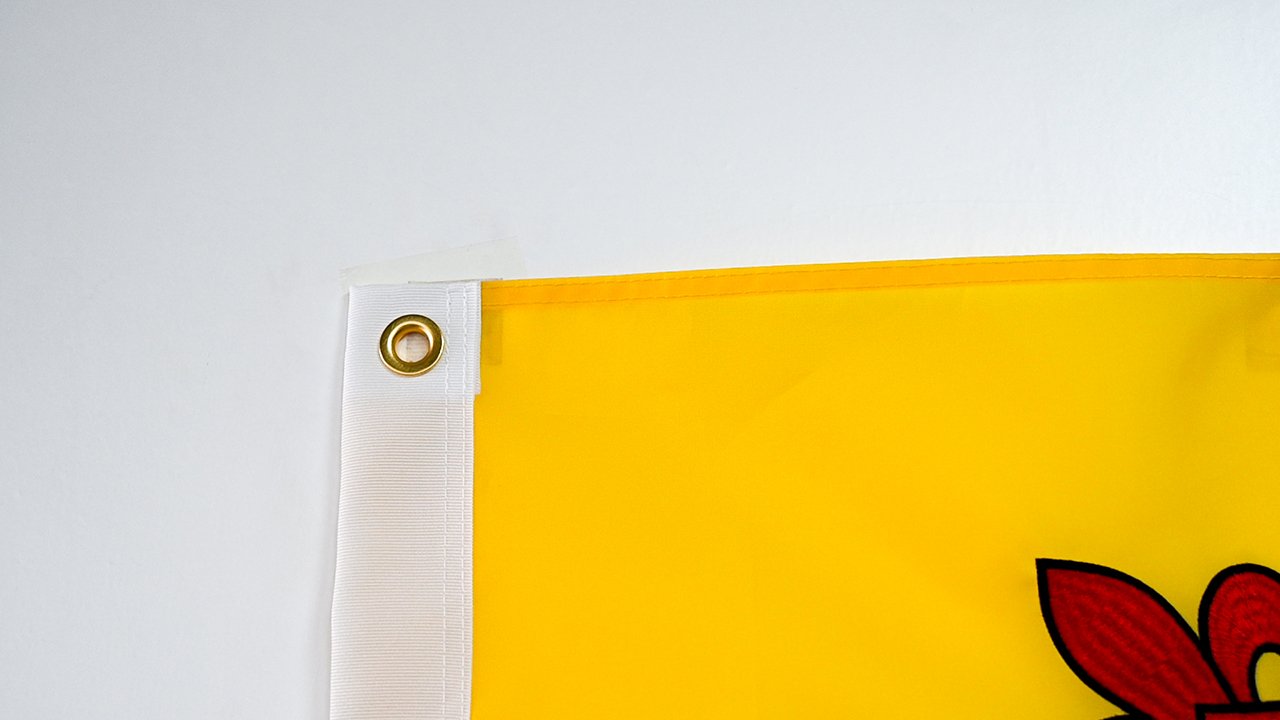
Grommets, sleeve headers, rope and toggle fittings, pole pockets and custom packaging all add steps. Each additional operation makes very small runs less efficient to produce.
A Practical Look at How MOQs Are Usually Structured
The exact numbers vary by supplier, product and printing method, and the only reliable figure is the one on your own quotation. That said, most custom flag pricing follows the pattern below — note how the minimum tends to rise as the order becomes more customised.
| Order type | What usually drives the minimum | How to approach it |
|---|---|---|
| Stock design in a standard size | Pulled from existing production batches | Often the most flexible option for small quantities |
| Custom design, digital or dye-sublimation | Artwork preparation and machine setup | Best value when you need full-colour artwork |
| Custom design, screen printed | One screen per colour in the design | Reduce colours, or increase quantity to spread setup cost |
| Large outdoor flags or banners | Fabric consumption, stitching and finishing time | Confirm the size range before finalising artwork |
| Double-sided or premium constructions | Extra panels, blocking layer and hand finishing | Plan the quantity around the higher unit effort |
Many suppliers also apply tiered pricing: the per-unit price steps down as the quantity crosses certain thresholds. It is worth asking for a price break table rather than a single quote, because moving from one tier to the next can sometimes cost very little more than the tier below it.
Ways to Work Within a Minimum Order Quantity
- Mix designs in one run. Some suppliers allow you to split a minimum across several designs, sizes or colourways as long as the total quantity is met. This is popular with clubs, schools and multi-brand retailers.
- Choose a standard size. Sticking to common dimensions reduces cutting and setup work.
- Simplify the artwork. Fewer colours can lower a screen-printing minimum considerably.
- Order a sample first. A pre-production sample lets you check colour, fabric weight and finishing before committing to the full run.
- Plan for replenishment. If you expect to reorder, ask whether repeat orders carry the same minimum — artwork is already on file, which can make restocking easier.
- Combine departments or events. One coordinated order often clears the minimum that several separate orders would each fail to reach.
What to Confirm Before You Place a Custom Flag Order
- The MOQ for your specific design, size, fabric and finishing — ask for it in writing.
- Whether the minimum applies per design or per total order.
- The price break thresholds and the unit price at each level.
- The cost and lead time of a pre-production sample.
- The minimum for reorders and for adding units later.
- Artwork requirements — file format, resolution and colour reference.
- Production and delivery timelines, especially for dated events.
Getting these answers early prevents the most common frustration in custom flag buying: designing the perfect flag, then discovering the quantity needed to produce it does not match the quantity you actually need.
Final Thoughts
A minimum order quantity is simply the point at which custom manufacturing makes economic sense. Once you understand that printing method, size, construction and finishing all influence the number, you can plan your order around it — combining designs, choosing a standard size, or scaling up slightly to reach a better price tier.
Ready to find out what the minimum looks like for your flag? Browse the custom flag and banner options at flags-factory.com, send over your artwork and quantity, and our team will confirm the details for your specific project.
